
How to Search Civil Dockets
Your first job is sorting the case into the right court. Superior Court of Wilkes County takes major civil matters, equity, divorce, and land-title disputes. Magistrate Court handles claims generally up to $15,000. It also takes dispossessories, garnishments, and foreclosures at the lower level. Estates, wills, guardianships, and conservatorships go through Probate Court. For a Superior matter, open the Georgia E-Access directory and select Wilkes Superior. Then follow the PeachCourt link. Its public landing page is account-gated, so access may stop there. If it does, call the Superior Clerk at 706-678-2423. Or visit 23 Court Street, Room 301, Washington. Magistrate searches start with that office at 706-678-1881. Probate matters begin at 706-678-2523.
- Read the complaint, summons, notice, or prior order for the exact court name.
- Gather the full party names, filing year, case number if known, and case type.
- Use the official court-specific online path when one is available.
- Ask the responsible clerk to inspect the public docket when the provider does not show it.
- Request the named pleading, order, or judgment and specify plain or certified copy.
Wilkes Civil Court Split
One phrase, "civil case," can lead to three different counters in Wilkes County. The Superior Clerk maintains the Wilkes County civil docket for broad civil jurisdiction. That jurisdiction covers equity, divorce, and land-title cases. Magistrate Court keeps a register of its own. It holds small claims, dispossessories, garnishments, and similar work. Probate Court holds the files on estates and protected persons. Jurisdiction decides where a case lands, never a party's address.
| Court | Civil work | Starting point |
|---|---|---|
| Superior Court | Major civil, equity, divorce, and land-title matters | Georgia E-Access, PeachCourt, or Superior Clerk |
| Magistrate Court | Claims generally up to $15,000, dispossessory, garnishment, related actions | Magistrate office at 706-678-1881 |
| Probate Court | Estates, wills, guardianship, and conservatorship proceedings | Probate office at 706-678-2523 |
Pick the wrong court and the search may come back empty even though the case is real. Ask which clerk assigned the action number before you widen the hunt.
What a Civil Docket Shows
Georgia Uniform Superior Court Rule 39.2 offers the best official list of what a Wilkes County civil docket should contain. The rule calls for the action number, cause, lawyers, parties, filing date, costs, service details, pleadings, trial data, disposition, judgment information, appeal activity, and final-record references. Treat that list as the clerk's required framework. PeachCourt may not display every field before login.
| Case header | Action number, cause, parties, counsel, filing date, and assigned judge where applicable. |
|---|---|
| Service and filings | Service date and type, complaint, answer, motions, notices, and other pleadings with dates. |
| Settings | Trial date and type, hearing notices, resets, and other proceeding dates entered in the case. |
| Result | Dismissal, settlement, judgment, verdict, mistrial, or another recorded disposition. |
| After judgment | Fi Fa date, transcript, new-trial motion, notice of appeal, and remittitur. |
Each docket line is only an index to an event. When the line cites an order or judgment, pull the filed document to read its actual terms.
Rule 39.2 in Wilkes
The official Georgia court rules index opens the Uniform Superior Court Rules. Those rules define the civil docket schema. They also explain why a civil register keeps moving after the main judgment. A notice of appeal, a transcript entry, or a remittitur may show up later. A Fi Fa can record post-judgment enforcement activity as well. The index lays out the official route. It leads to the rule text behind the Wilkes County civil docket field map.
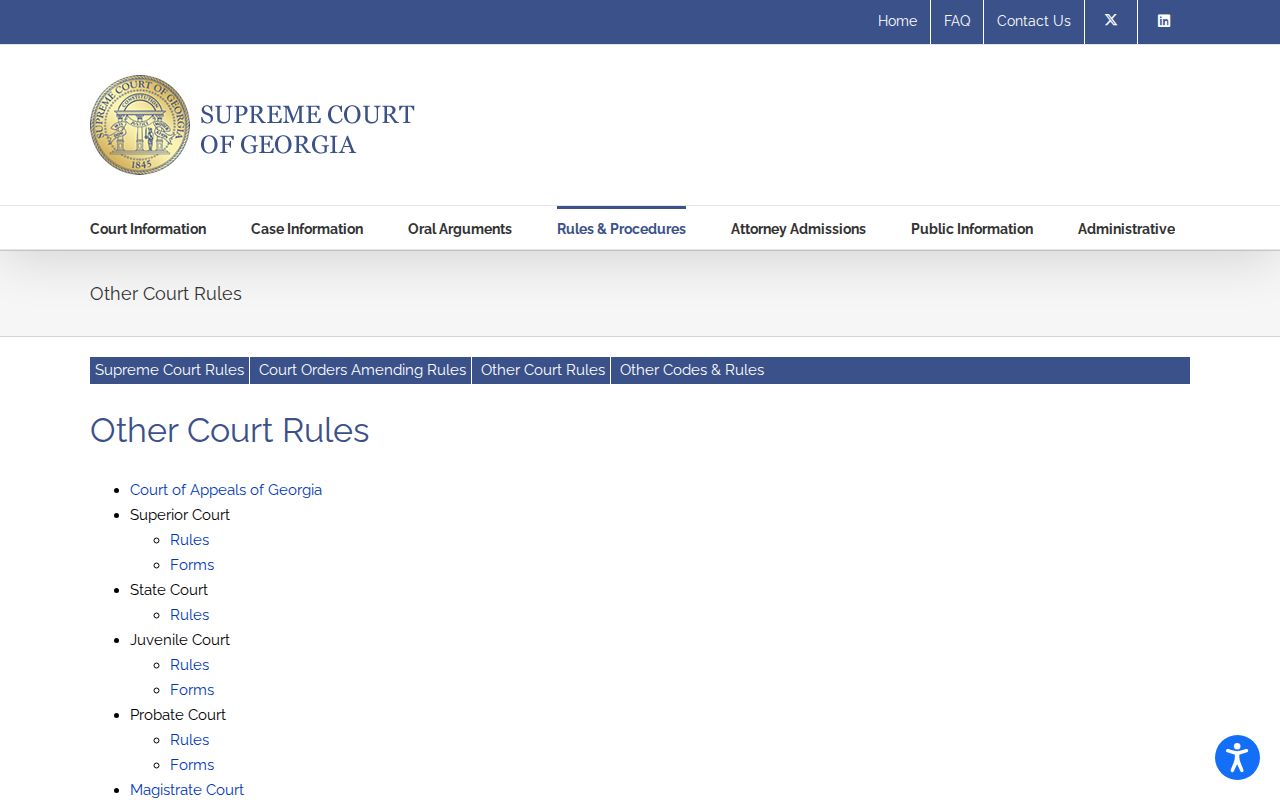
The rule fixes the categories; the Clerk fills them in. For actual entries and public copies in a Wilkes case, that office is the source.
- Fi Fa
- A Georgia execution record associated with enforcement of a judgment.
- Disposition
- The result that closes a claim or case, such as dismissal, settlement, or judgment.
- Remittitur
- The appellate mandate returned to the trial court after review.
Types of Civil Cases on the Docket
The Superior Court's Wilkes County civil docket can hold major civil and equity matters. It also carries divorce and land-title disputes. Rule 39.2 also expects party, service, pleading, trial, and disposition data across civil causes. Access to family-related filings may be limited where the papers carry protected identifiers. A law or order can also seal part of the record. Magistrate civil work sits apart. That court's authority covers claims, dispossessories, garnishments, and foreclosures or related actions. Probate proceedings are civil in a broad sense. Yet the register for a will, estate, guardianship, or conservatorship is not reached through the Superior civil path. When in doubt, the caption and case type on a notice settle the question.
- Contract, tort, property, equity, divorce, and land-title matters may reach Superior Court.
- Small claims, dispossessories, and garnishments begin in Magistrate Court when within its jurisdiction.
- Estate and guardianship proceedings belong to Probate Court.
- Juvenile and adoption records have special confidentiality rules and are not ordinary public civil dockets.
Wilkes Magistrate Fee Context
The Wilkes Magistrate fee schedule, effective January 1, 2024, separates filing costs from record-copy costs. A claim, foreclosure, interrogatories, dispossessory, or garnishment runs $95. Service on two defendants brings the stated total to $145. Each added service in the same case is $50. A writ of possession costs $25. Fi Fa with recording and alias Fi Fa with recording are $29 each.
| Magistrate item | Published amount |
|---|---|
| Claim, foreclosure, interrogatories, dispossessory, or garnishment | $95 |
| Filing plus service on two defendants | $145 |
| Each additional service in same case | $50 |
| Writ of possession | $25 |
| Fi Fa or alias Fi Fa with recording | $29 |
These are filing and service amounts, not copy prices. The Wilkes Superior civil copy fee has no published schedule.
Settings and Hearings on Civil Dockets
The Superior Clerk's Judicial Division prepares civil ready and trial calendars. A calendar is just a working list for one session. It cannot replace the full Wilkes County civil docket. For a specific case, the source that matters is a notice of setting or order in the register. Read the latest entry for a reset, continuance, or specially set hearing. Any unclear date deserves a quick call to the Clerk. Civil settings do different jobs. A hearing may take up a motion or temporary issue. A ready calendar tests whether cases are prepared to move. Trial settings can be jury or nonjury. The docket keeps the history even after a date shifts. So an earlier entry never stands in for the current date without checking newer filings. The court posts no separate civil calendar search. It offers no local setting-code glossary and no standing remote-hearing page.
Wilkes Standard Civil Forms
A Wilkes County civil docket entry often boils down to a short document name. The Georgia Superior Court standard forms directory helps decode those names. The directory lists blank statewide forms. A filing might reference summons, subpoena, final disposition, and Fi Fa. Remember what a blank form is not. It is no substitute for the filed copy. It reveals nothing about the facts of a case. It only shows what kind of paper a docket entry points to. The official statewide directory lays out each form and its purpose.
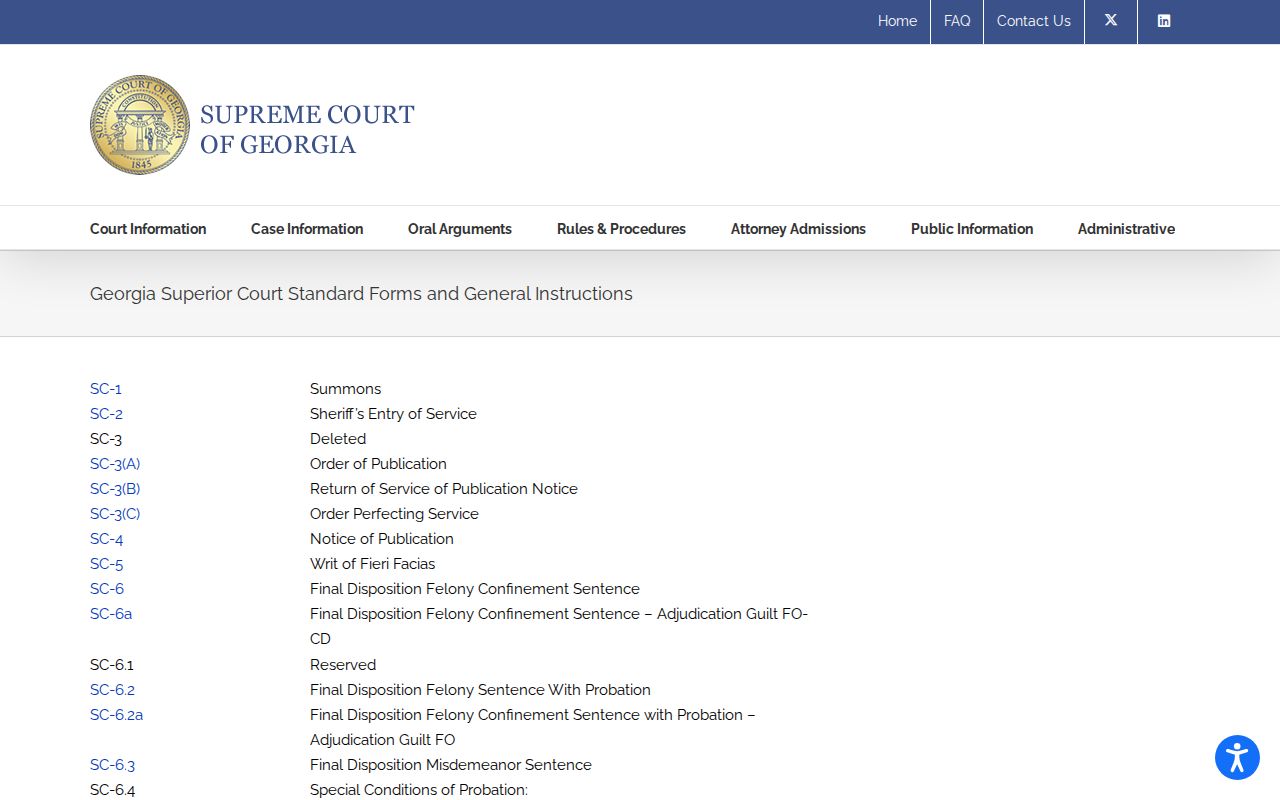
So when a Wilkes County docket entry names one of these forms, go past the blank. Ask the clerk for the filed version from the actual case file. That filed copy is the court record.
Public Access to Civil Dockets
Georgia law treats civil court records as open. Uniform Superior Court Rule 21 presumes public inspection. That presumption holds unless a statute or court procedure says otherwise. There are limits, though. Rule 21.6 and O.C.G.A. § 9-11-7.1 require protected identifiers to be redacted. They must be routed through a protected filing process. Adoption dockets stay confidential unless a judge orders the file open. When a judge seals something, the order should name the protected material. It should also give the legal basis.
What if PeachCourt shows nothing for the Wilkes County civil docket? Ask the clerk. The record could be restricted. It could be too old to be digitized, or held by a different court. It might also sit outside what the provider displays. Where a public redacted copy exists, request it. A blank result, by itself, does not settle any of these possibilities.
Access route: inspect with the correct clerk first. For a non-online public record, follow the Georgia Attorney General's request steps, identify the record narrowly, ask for an estimate, and request the cited exemption for any withheld part.
Beyond the Wilkes Civil Docket
A Wilkes County civil docket entry can confirm the basics. It shows that a complaint was filed. It shows that service happened. A motion may go on the record, and judgment may come after. What it will not show is the text of any of those papers. The complaint holds the allegations; the answer holds the response. The motion and its order explain the issue and the ruling. The judgment spells out its exact terms. Certified copies of any of these come from the clerk who keeps the original file.
Old cases need a bit more from you. Give the office the case style and the court. Give the approximate year too. Include any book, page, minute, or storage reference printed on the docket. For a current electronic case, cite the exact event date and the document title. Still hunting by party name or case number? The Wilkes County case search page lays out the court-specific search chain.